“The Public Woman 1984” is a French political drama that explores the power dynamics between gender and politics in the 1930s. It follows a woman named Marie, who runs for office and becomes the first female member of parliament in France. However, she faces backlash from her male colleagues and the media, who scrutinize her personal life and call into question her qualifications. As Marie fights to assert her authority, she finds herself caught in a web of intrigue and betrayal. The film is a poignant commentary on the struggles women face in male-dominated fields, and how their every move is scrutinized by society.

CLICK HERE🠣🠣🠣✔️_Watch The Public Woman 1984 English Subtitles_
Review
Ladies and gentlemen, it’s time to buckle up because we’re taking a ride on the wild side. The Public Woman is a movie that has gotten everyone talking, and trust me when I say this: it deserves all the attention it’s been getting.
Now, I know what you’re thinking – another movie about women, right? Wrong. This isn’t your average run-of-the-mill flick; this is a daring masterpiece that challenges societal norms and dares you to confront your own beliefs about gender roles.
The storyline is nothing short of captivating. We follow the character of Marie-Louise Giraud (played by Valérie Kaprisky), a young woman who rises from being a prostitute to becoming one of the most powerful women in pre-revolutionary France. She does so by using her sexuality as a weapon and manipulating men to get what she wants.
The plot takes an exciting turn when she falls in love with a revolutionary man named François Leclercq (played by Lambert Wilson). Their passionate love affair causes tensions between Marie-Louise and the male-dominated society around her, prompting her to make difficult choices that will ultimately define her legacy.
The Public Woman is based on true events, adding a layer of historical significance that elevates it from mere entertainment to thought-provoking commentary. Director Andrzej Żuławski masterfully brings this story to life with his distinct visual style, creating an immersive experience that transports viewers back in time.
But let’s talk about the cast for a moment. Valérie Kaprisky delivers an unforgettable performance as Marie-Louise Giraud. Her portrayal perfectly captures the character’s complexity – vulnerable yet manipulative, ambitious yet deeply flawed. Lambert Wilson shines as François Leclercq, providing us with an emotionally charged performance that makes us care deeply about his character.
One quote from the film that resonates deeply with me comes from Francois Leclercq when he says, “You can’t control your own life if you don’t control the language in which you think.” It’s a powerful statement that speaks to the film’s themes of power and control.
The cinematography is gorgeous, capturing the beauty and opulence of pre-revolutionary France. The soundtrack also deserves special mention – it perfectly complements the film’s emotional beats, adding another layer of depth to an already rich experience.
The Public Woman has gained a lot of popularity since its release. It has been screened at several film festivals around the world and garnered rave reviews from critics and audiences alike. It won the Best Director award at the Cannes Film Festival in 1984, cementing its place in cinematic history.
But as with any groundbreaking work of art, The Public Woman has not been without its share of controversy and criticism. Some have accused it of promoting sexist ideas or glorifying prostitution. However, I would argue that by depicting these issues within their historical context, the film is not condoning them but rather forcing us to confront them head-on.
In terms of production value, The Public Woman is a masterclass in filmmaking. From expertly crafted dialogue to stunning special effects, everything about this movie is top-notch.
All in all, The Public Woman is an impactful movie that demands attention. Its bold themes and fearless approach make it a must-watch for anyone interested in exploring complex characters and societal norms. Don’t just take my word for it – go see it for yourself and experience this cinematic triumph first-hand.
Technical Data
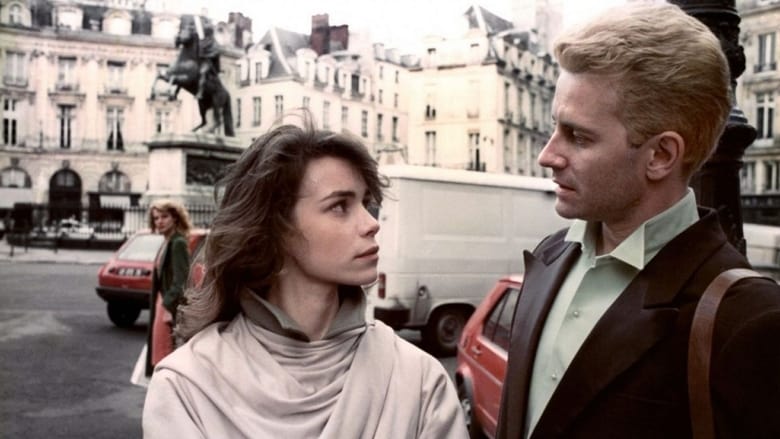
- Release : 1984-06-16
- Runtime : 113
- Genre : Drama
- Cast : Valérie Kaprisky as Ethel, Francis Huster as Lucas Kessling, Lambert Wilson as Milan Mliska, Patrick Bauchau as Ethel’s Father, Gisèle Pascal as Gertrude
- Crew : Sacha Vierny as Director of Photography, Andrzej Żuławski as Director, Andrzej Żuławski as Writer, René Cleitman as Producer, Jean Zay as Costume Design
- Revenue : 0
- Budget : 0
- Company : Hachette-Fox Productions
- Popularity : 7.323
- Summary : An inexperienced young actress is invited to play a role in a film based on Dostoyevsky’s ‘The Possessed’. The film director, a Czech immigrant in Paris, takes over her life, and in a short time she is unable to draw the line between acting and reality. She winds up playing a real-life role posing as the dead wife of another Czech immigrant, who is manipulated by the filmmaker into commiting a political assassination.
- Tagline :
