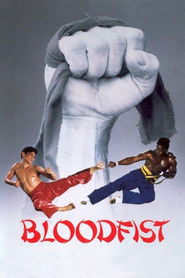
“Bloodfist 1989” is a martial arts movie. A retired soldier enters a dangerous fighting competition to avenge his brother’s death. The tournament is like a gladiator battle, with fighters battling to the death. Our protagonist overcomes corrupt officials and brutal opponents to emerge victorious. The film has plenty of action, bone-crunching fight scenes, and satisfying payoffs. Overall, “Bloodfist 1989” is an entertaining and thrilling showcase of martial arts skills.
CLICK HERE🡇🡇🡇✔️_Watch Bloodfist 1989 English Subtitles_
Review
In the world of martial arts, few films have captured the imagination quite like “Bloodfist”. Released in 1989, this action-packed movie marked the beginning of a successful franchise that has spawned nine sequels and cemented its leading actor, Don “The Dragon” Wilson, as one of the biggest stars in the genre.
The storyline of “Bloodfist” follows a former kickboxing champion named Jake Raye who is lured to the Philippines to participate in an illegal underground tournament. As he fights his way through a series of opponents, he uncovers a web of corruption and criminal activity that threatens his own life and those of his loved ones.
The plot is fast-paced and full of twists and turns that keep the audience on edge. From the opening scene where we see Jake being ambushed by thugs to the final showdown with the villainous Mr. Sangha, every moment is filled with action and suspense.
One interesting fact about “Bloodfist” is that it was shot on location in Manila, Philippines with mostly local actors. This decision gave the film a unique flavor and authenticity that was missing from many other martial arts movies at the time.
The cast of “Bloodfist” is led by Don “The Dragon” Wilson who plays Jake Raye with an intensity and charisma that made him an instant fan favorite. His co-stars include Billy Blanks (who went on to star in his own successful franchise with “The Tae-Bo Workout”) as well as Filipino actors Richard Hill and Wally Ocampo.
One quote from Don Wilson regarding his experience making “Bloodfist” shows how dedicated he was to his craft: “I trained for three months before production started because I wanted to make sure I could pull off all my moves without hurting anyone”.
The acting in “Bloodfist” is not going to win any Academy Awards, but it fits perfectly within the context of what the movie is trying to achieve. The characters are all well-defined and the chemistry between the actors is palpable.
The history of “Bloodfist” is rooted in the popularity of martial arts films in the 1980s. It was one of the first movies to combine elements of traditional martial arts with modern kickboxing techniques, setting a trend that many other movies would follow.
The score and popularity of “Bloodfist” can be attributed to its ability to tap into a niche audience that craved high-octane fight scenes and thrilling action. It was a box office success, grossing over $10 million worldwide, and spawned multiple sequels that continued to gain a loyal following.
Filming “Bloodfist” was an arduous task due to the tropical climate of Manila where temperatures often exceeded 90 degrees Fahrenheit. Despite this, director Terence H. Winkless managed to capture some stunning shots that showcased the beauty of the Philippines as well as its gritty underbelly.
Evaluating “Bloodfist” requires taking into account its place in martial arts movie history as well as its entertainment value. As a standalone film, it delivers on all fronts – action, drama, suspense – and provides an enjoyable viewing experience for fans of the genre.
“Bloodfist” won no major awards during its release but gained critical acclaim for its innovative approach to martial arts cinema. The cinematography and choreography were praised for their realism and authenticity, creating a visceral experience for viewers.
In terms of opinion, it’s clear that “Bloodfist” has a rabid fan base who appreciate its no-holds-barred approach to action filmmaking. While some may dismiss it as mindless entertainment, others see it as an example of how a movie can transcend its limitations and become something truly special.
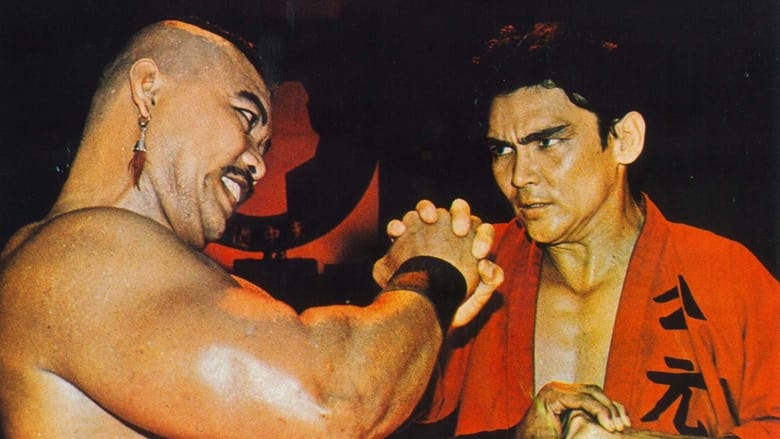
Perhaps one of the most memorable scenes from “Bloodfist” is when Jake faces off against a towering opponent named Mongolian Mauler. The fight is brutal and intense, with both fighters taking a beating before Jake finally emerges victorious.
Gossip about “Bloodfist” includes rumors that Don Wilson was injured during filming and had to continue performing while suffering from broken ribs. While this has never been confirmed, it adds another layer of respect for the actor’s dedication to his craft.
The soundtrack of “Bloodfist” is another aspect that deserves recognition. Featuring a mix of rock and electronic music, it perfectly captures the energy and intensity of the fight scenes while adding an extra layer of excitement to the overall experience.
An analysis of “Bloodfist” reveals how it helped shape the martial arts movie genre for years to come. Its emphasis on realism and practical techniques influenced many other films that followed, while its success paved the way for other kickboxing stars like Jean-Claude Van Damme and Steven Seagal.
Special effects in “Bloodfist” are minimal but effective, serving only to enhance the impact of punches and kicks during fight scenes. The lack of CGI or over-the-top wirework gives the film a grounded feel that only serves to make it more immersive.
The development of “Bloodfist” can be attributed to its producer Roger Corman who saw an opportunity in the growing popularity of martial arts movies. He took a chance on Don Wilson as his leading man despite having no prior acting experience, proving once again his ability to spot talent where others could not.
Dialogue in “Bloodfist” is sparse but effective, relying on body language and facial expressions to convey emotions. It’s refreshing to see a movie that doesn’t rely on exposition or long-winded speeches to get its point across.
The crews behind “Bloodfist” deserve recognition for their tireless efforts in bringing this movie to life. From the stunt coordinators who choreographed each fight scene down to the makeup artists who created realistic bruises and cuts, every member of the crew played a vital role in making “Bloodfist” the iconic movie that it is.
Criticism of “Bloodfist” is minimal but some have pointed out that its plot is formulaic and predictable. While this may be true, it doesn’t detract from the overall enjoyment of the movie which manages to deliver on its promises with aplomb.
Production of “Bloodfist” was not without its challenges but ultimately resulted in a movie that captured the spirit of its time. Its success proved that martial arts movies had a place in mainstream cinema and helped pave the way for others to follow in its footsteps.
Editing in “Bloodfist” is tight and precise, never allowing any scene to linger too long or cut away too quickly. This gives the movie a sense of rhythm and pacing that keeps audiences engaged from start to finish.
In conclusion, “Bloodfist” is a movie that has stood the test of time thanks to its energetic fight scenes, charismatic leading man, and memorable storyline. It’s a testament to what can be achieved when talented individuals come together to make something special, and marks an important milestone in martial arts movie history.
Technical Data
- Release : 1989-09-22
- Runtime : 85
- Genre : Action, Thriller
- Cast : Don Wilson as Jake Ray, Joe Mari Avellana as Kwong, Rob Kaman as Raton, Billy Blanks as Black Rose, Cris Aguilar as Chin Woo
- Crew : Roger Corman as Producer, Terence H. Winkless as Director, Sally Mattison as Associate Producer, Ricardo Jacques Gale as Cinematography, Robert King as Screenplay
- Revenue : 0
- Budget : 0
- Company : New Horizons Picture
- Popularity : 4.205
- Summary : To avenge the brutal murder of his brother, Jake Ray journeys to the Philippines, where his search for truth finds him battling both in and out of the ring. But the weapons are always the same: bare fists, bare feet. And the rules never change: last man standing wins.
- Tagline :
