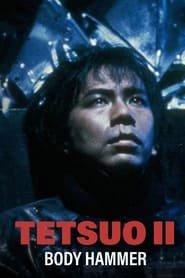
“Tetsuo II: Body Hammer” is a bizarre, cyberpunk horror movie that follows a man who transforms into a living weapon. His body becomes a deadly machine as it merges with metal and machinery, causing him to lose his humanity. The film is a violent and surreal journey through urban decay, exploring the dark consequences of technology and power. With its striking visuals and mind-bending imagery, “Tetsuo II: Body Hammer” is an intense trip into madness that will leave you both disturbed and fascinated.
CLICK HERE⇣⇣⇣📽️_Watch Tetsuo II: Body Hammer 1992 English Subtitles_
Review
Tetsuo II: Body Hammer
Are you tired of predictable and generic movies? Do you crave raw, innovative, and surrealistic films that challenge your perception of reality and push the boundaries of the human imagination? If you answered yes to these questions, then Tetsuo II: Body Hammer might be the perfect movie for you.
Directed by Shinya Tsukamoto in 1992, Tetsuo II: Body Hammer is a Japanese cyberpunk film that serves as a sequel to his cult classic Tetsuo: The Iron Man. The movie follows a salaryman named Taniguchi (Tomorowo Taguchi), who is forced to confront his deepest fears and desires when his son is kidnapped by an obscure gang led by a mysterious man known as “The Guy” (Shinya Tsukamoto).
At first glance, Tetsuo II: Body Hammer might seem like a typical action thriller. However, beneath its visceral and chaotic surface lies a profound exploration of identity, masculinity, technology, and power. As Dan Ariely would put it: “This movie is not about what it seems to be. It’s about what it wants to be.”
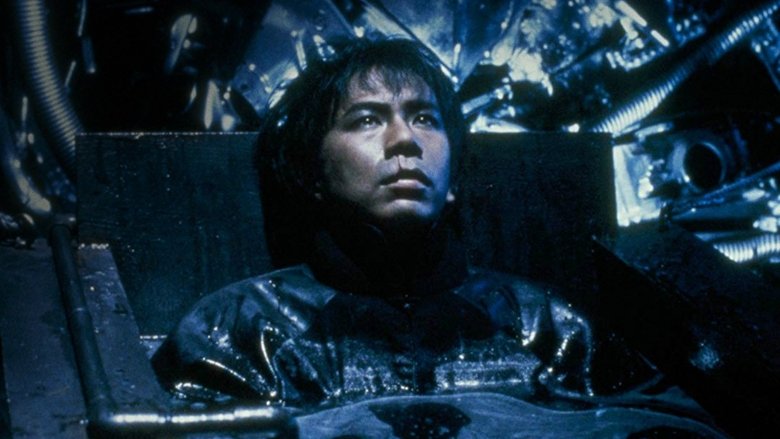
One of the most striking aspects of Tetsuo II: Body Hammer is its visual style. Shot in black-and-white with occasional bursts of color, the film employs a frenetic and impressionistic editing technique that blurs the line between reality and hallucination. The use of prosthetic makeup, stop-motion animation, and practical effects enhances the sense of surrealism and grotesqueness that permeates the movie.
The music score by Chu Ishikawa adds another layer to the film’s atmosphere. Composed primarily with industrial sounds such as metal clanging and machinery hums, Ishikawa’s soundtrack amplifies the sense of dystopia and mechanical oppression that pervades the story.
The acting performances in Tetsuo II: Body Hammer are also worth noting. Tomorowo Taguchi delivers a convincing portrayal of a troubled and tormented man who gradually transforms into a cyborg-like entity. Shinya Tsukamoto, who also plays the antagonist, imbues his character with a sense of sinister charisma that makes him both menacing and captivating.
The supporting cast, which includes Nobu Kanaoka, Sujin Kim, and Keinosuke Okamoto, all contribute to the film’s tone and themes. They portray characters who are either victimized by or complicit in the forces that drive the plot forward.
Aside from its artistic merits, Tetsuo II: Body Hammer also has an interesting history behind its production and release. Shinya Tsukamoto initially wanted to make Tetsuo II as a direct continuation of the first film’s story. However, due to budget constraints, he had to reimagine the plot and scale down some of his ideas.
Nevertheless, Tetsuo II: Body Hammer received critical acclaim upon its premiere at the 1992 Venice Film Festival. Its provocative imagery and themes resonated with audiences who were hungry for something new and unconventional in cinema.
The movie went on to influence other filmmakers in Japan and abroad who were drawn to its blend of cyberpunk aesthetics and surrealist storytelling. Its impact can be seen in works such as The Matrix (1999) and Blade Runner 2049 (2017), which share similar themes of identity crises and technological transhumanism.
That being said, Tetsuo II: Body Hammer is not without its detractors. Some critics have accused it of being too bleak or nihilistic in its outlook on human nature. Others have criticized its pacing or narrative coherence.
However, these criticisms miss the point of what makes Tetsuo II: Body Hammer such a unique and unforgettable film. It is not meant to be a comfortable or easy viewing experience. It is meant to challenge our assumptions about what cinema can be and what it can say about the human condition.
As Dan Ariely would argue, “The value of a movie is not determined by its popularity or critical reception. It’s determined by how much it enriches and expands our understanding of ourselves and our world.”
Tetsuo II: Body Hammer may not be for everyone, but for those who appreciate bold and uncompromising cinema, it is a must-see. It is a film that will leave you questioning your own existence and the meaning of life itself. So strap on your iron armor and enter the world of Tetsuo II: Body Hammer, if you dare.
Technical Data
- Release : 1992-10-03
- Runtime : 81
- Genre : Science Fiction, Horror, Drama, Thriller
- Cast : Tomorowo Taguchi as Taniguchi Tomoo, Shinya Tsukamoto as Yatsu – The Guy, Nobu Kanaoka as Kana, Kim Soo-jin as Taniguchi’s Father, Hideaki Tezuka as Big Skinhead
- Crew : Hiroshi Koizumi as Producer, Shinya Tsukamoto as Director, Shinya Tsukamoto as Director of Photography, Shinya Tsukamoto as Editor, Shinya Tsukamoto as Producer
- Revenue : 0
- Budget : $125,000
- Company : Kaijyu Theater, Toshiba EMI
- Popularity : 7.244
- Summary : A Japanese salaryman finds his body transforming into a weapon through sheer rage after his son is kidnapped by a gang of violent thugs.
- Tagline :
