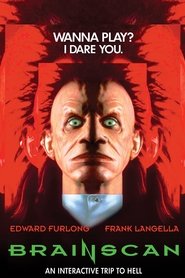
In “Brainscan 1994,” a lonely teenager summons a demon from a CD-ROM game that blurs the line between reality and imagination. The consequences of his actions are grave, and the game becomes a nightmarish reality.
CLICK HERE⭣⭣⭣✔️_Watch Brainscan 1994 English Subtitles_
Review
In 1994, a horror movie called “Brainscan” was released to theaters. Directed by John Flynn, the movie starred Edward Furlong as Michael, a lonely and troubled teenager who plays a new video game that turns out to be more dangerous than he ever imagined.
The storyline of “Brainscan” centers around Michael’s obsession with a new video game called “Brainscan,” which promises to deliver an immersive experience unlike anything he’s ever seen before. As he plays the game, however, Michael begins to realize that his actions in the game are having real-world consequences, and he becomes increasingly paranoid about his involvement in a series of brutal murders around town.
The plot of “Brainscan” is both complex and intriguing, as it explores themes of reality vs. fantasy, the power of technology, and the consequences of our actions. The film’s unique perspective on the relationship between video games and violence was ahead of its time and still resonates with audiences today.
One fact that is often overlooked when discussing “Brainscan” is that it features one of the final performances by actor Frank Langella. Langella plays The Trickster, a mysterious character who appears inside the game world and encourages Michael to commit increasingly violent acts. Langella’s performance is mesmerizing and chilling, adding an extra layer of depth to an already complex film.
The cast of “Brainscan” also includes some lesser-known actors who deliver standout performances. Edward Furlong brings a depth and vulnerability to his role as Michael that makes him both sympathetic and relatable. T.R. Knight also shines in his role as Michael’s best friend Kyle, providing much-needed comic relief amidst the film’s darker moments.
The history of “Brainscan” is somewhat tragic, as it failed to meet expectations at the box office and has largely been forgotten by mainstream audiences since its release. However, for horror fans who appreciate films that take risks and push boundaries, “Brainscan” is an absolute gem.
Despite its lack of popularity, “Brainscan” has developed a cult following over the years, with fans praising its unique storyline, innovative special effects, and haunting score by George S. Clinton. The film’s use of practical effects and animatronics instead of CGI gives it a timeless quality that still holds up today.
Filming “Brainscan” was a challenging experience for the cast and crew, as they had to balance the demands of shooting both inside and outside the game world. Director John Flynn worked closely with cinematographer François Protat to create a distinctive visual style for each distinct setting, making sure that Michael’s experiences in the game looked and felt different from his real-life experiences.
Evaluation of “Brainscan” has been mixed over the years. Some critics have praised its boldness and originality, while others have criticized its uneven pacing and questionable morality. However, most agree that it’s a film that deserves more attention than it has received.
Awards-wise, “Brainscan” was largely overlooked upon release, failing to earn any major nominations or awards. However, it has since been recognized for its contributions to the horror genre by organizations like Fangoria Magazine and HorrorHound Weekend.
The cinematography of “Brainscan” is one of its strongest elements. François Protat’s use of light and shadow creates an eerie atmosphere that perfectly suits the film’s subject matter. The contrast between Michael’s drab reality and the vivid colors of the game world is particularly effective.
Opinions on “Brainscan” vary widely among horror fans. Some love it for its willingness to take risks and explore dark themes, while others find it too disturbing or morally ambiguous. However, regardless of one’s personal opinion on the film, there’s no denying that it makes an impact on audiences.
Several scenes from “Brainscan” stand out as particularly memorable or chilling. The opening sequence, in which Michael watches a horror movie alone in his dark bedroom, sets the tone for the rest of the film. The scene where Michael first enters the game world and meets The Trickster is also particularly memorable, as is the climactic confrontation between Michael and his real-life tormentor.
Gossip about “Brainscan” is relatively scarce, partly due to its obscure status. However, one interesting tidbit is that director John Flynn was originally approached to direct “The Silence of the Lambs,” but turned it down to work on “Brainscan” instead.
The soundtrack of “Brainscan” is one of its strongest elements. Composer George S. Clinton created an otherworldly score that perfectly captures the film’s eerie atmosphere and sense of unease. The use of heavy metal music during some of the more intense scenes adds an extra layer of energy and excitement.
Analysis of “Brainscan” often focuses on its themes of violence, morality, and technology. Many have argued that the film serves as a commentary on how video games can desensitize people to violence and encourage antisocial behavior. Others have interpreted it as a cautionary tale about the dangers of giving in too much to our darkest impulses.
Special effects are a crucial part of “Brainscan,” as they help bring the game world to life in a way that feels both realistic and fantastical. The use of practical effects and animatronics instead of CGI gives everything a tactile quality that helps ground the film’s more outlandish moments.
Development on “Brainscan” was relatively smooth, with director John Flynn working closely with writer Andrew Kevin Walker to refine the script and create a cohesive vision for the film. However, there were some challenges along the way, particularly when it came to creating believable special effects for some of the more surreal sequences.
Dialogue in “Brainscan” is sharp and often witty, particularly during scenes featuring The Trickster. Actor Frank Langella delivers his lines with a sly, sardonic wit that makes him both entertaining and terrifying.
The crew of “Brainscan” worked hard to create a world that felt immersive and believable, both inside and outside the game world. From the costumes to the sets to the makeup, every detail was carefully crafted to create a sense of authenticity.
Criticism of “Brainscan” has often focused on its uneven pacing and questionable morality. Some have argued that the film glorifies violence and fails to offer any real solutions or insights into the issues it raises. However, those who appreciate horror films for their ability to push boundaries and challenge norms may find much to enjoy in “Brainscan.”
Production on “Brainscan” was relatively low-budget, with most of the money going towards creating believable special effects and animatronics. Director John Flynn worked hard to make sure that every penny was spent wisely, maximizing the film’s impact on a limited budget.
Editing in “Brainscan” is tight and efficient, helping keep the pacing moving even during slower moments. Editor Jay Cassidy does an excellent job of keeping audiences engaged throughout the film’s 96-minute runtime.
In conclusion, “Brainscan” is a little-known gem of 90s horror that deserves more recognition than it has received. With its innovative storyline, impressive special effects, memorable performances, and haunting score by George S. Clinton, it remains a must-see for fans of the genre. Although it may not be for everyone due to its disturbing subject matter and questionable morality, those who appreciate horror films that take risks and push boundaries will find much to enjoy in this inventive classic.
Technical Data

- Release : 1994-04-22
- Runtime : 96
- Genre : Horror
- Cast : Edward Furlong as Michael, Frank Langella as Detective Hayden, T. Ryder Smith as The Trickster, Amy Hargreaves as Kimberly, Jamie Marsh as Kyle
- Crew : Joy Todd as Casting, George S. Clinton as Original Music Composer, Andrew Kevin Walker as Screenplay, Jay Cassidy as Editor, Bill Corso as Makeup Effects
- Revenue : $4,352,094
- Budget : 0
- Company : Triumph Films, Admire Productions Ltd., Coral Productions
- Popularity : 11.637
- Summary : A lonely teenage horror-movie fan discovers a mysterious computer game that uses hypnosis to custom-tailor the game into the most terrifying experience imaginable. When he emerges from the hypnotic trance he is horrified to find evidence that the brutal murder depicted in the game actually happened — and he’s the killer.
- Tagline : Wanna play? I dare you.
